


A boiler that’s leaking water or making a strange noise is usually trying to tell you something, and it doesn’t automatically mean you need a new boiler. Some causes are simple and cheap to fix. Others, especially in an older boiler, are signs that another repair isn’t really worth it. Here’s how to tell the difference, whether you’re in Leigh, Warrington, Wigan or nearby.
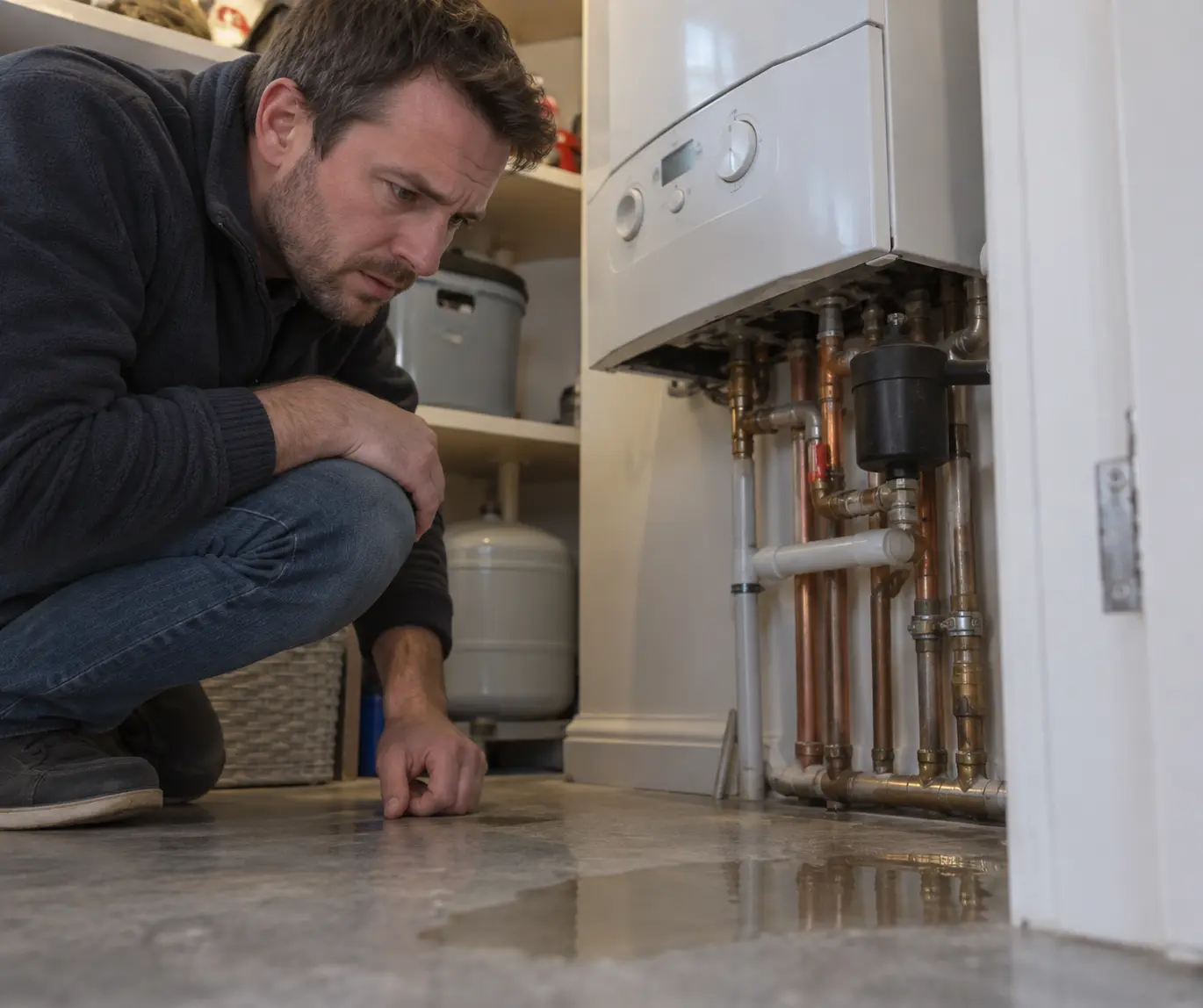
What a Leaking or Noisy Boiler Is Usually Telling You
Leaks and unusual noises often come from the same root causes: limescale building up inside the system, a drop in pressure, or general wear as a boiler gets older. The good news is that neither problem is automatically serious. The bad news is that both can point to something more significant if they keep coming back.
Common Causes of a Leaking Boiler
A leak can come from several places, not always the boiler itself:
- A worn pressure relief valve or seal, often the cheapest and most common cause
- A build-up of limescale putting extra strain on internal components
- Corrosion inside the boiler, which becomes more likely as it gets older
- A loose pipe connection or fitting nearby, rather than a fault with the boiler
Common Causes of Boiler Noise
Banging, whistling or gurgling noises usually mean one of the following:
- Kettling, where limescale narrows part of the heat exchanger and causes steam pockets, similar to the noise of a kettle boiling
- Trapped air in the system, often fixed simply by bleeding your radiators
- Low water pressure, which is worth checking first (see our guide on boiler pressure issues for what to look for)
When It’s Likely a Simple Repair
A repair is usually enough when the boiler is otherwise in decent condition. That includes a single worn valve or seal, trapped air you can bleed out yourself, or a pressure drop that’s easily topped back up. In these cases, a service or repair visit will usually sort it without needing a new system.
When It Usually Points to a New Boiler
Replacement tends to make more sense when:
- Rust-coloured water is leaking from inside the boiler casing itself, rather than a pipe or valve, which often means the heat exchanger is failing
- Kettling keeps coming back after a service, especially on a boiler that’s already 10 to 15 years old
- You’ve had several breakdowns in a short space of time, and the repair bills are adding up
- The boiler is old enough that replacement parts are becoming hard to source
In these situations, it’s worth weighing the cost of yet another repair against a new boiler installation, particularly on an older unit.
What to Check Yourself, and What to Leave to an Engineer
You can safely check for a puddle or damp patch under or near the boiler, note when a noise happens (constantly, only on start-up, or only when the heating’s running), and check the pressure gauge yourself. What you shouldn’t do is remove the boiler’s front cover or attempt to inspect anything inside it. That’s work for a Gas Safe registered engineer. If you ever smell gas or a carbon monoxide alarm sounds, turn the boiler off at the isolation point if it’s safe to do so, leave the property, and call the National Gas Emergency Service on 0800 111 999.
Boiler Age Across Leigh, Warrington and Wigan
A lot of homes across Leigh, Warrington and Wigan, particularly older terraces and properties built before condensing boilers became standard, are now reaching the point where the original boiler is 15 years old or more. Newer builds tend to have younger boilers, but they can still develop faults from general wear or the odd manufacturing issue. Age isn’t the only factor in a repair-or-replace decision, but it’s usually a big part of it.
What Does a New Boiler Cost?
As a guide, boiler prices start from around £2,200, including installation and VAT, for an entry-level A-rated model, rising for higher-output or larger systems. The actual cost for your home depends on the boiler, your existing system, and any extra work involved. Repair costs vary too much by fault and parts needed to give a general figure, so it’s worth asking for a clear quote once an engineer has had a proper look.
Frequently Asked Questions
Is a leaking boiler dangerous?
Not usually, a water leak on its own isn’t typically a gas safety issue, though it’s still worth getting checked promptly to avoid further damage. If you ever smell gas or your carbon monoxide alarm goes off, that’s different: turn off the boiler if safe to do so, leave the property, and call the National Gas Emergency Service on 0800 111 999.
How do I know if my boiler needs repairing or replacing?
A single fault on an otherwise reliable boiler is usually a repair. Repeated breakdowns, a corroded heat exchanger, or an ageing boiler with hard-to-source parts usually point toward replacement being the better value option.
Is it normal for an older boiler to make noise?
Some noise, like a faint hum, is normal. Banging or rumbling (kettling) usually isn’t, and often signals limescale build-up that’s worth having looked at before it gets worse.
Can I fix a noisy boiler myself?
Bleeding your radiators to clear trapped air is a safe DIY job. Anything involving the boiler’s internal parts should be left to a Gas Safe registered engineer.
Does a leaking boiler always mean I need a new boiler?
No. Many leaks come from a worn seal or valve rather than the boiler itself, and are a straightforward repair. Replacement only tends to make sense once the boiler is older or the same problems keep recurring.
The Next Step
A leak or a strange noise is worth getting checked sooner rather than later, especially heading into winter when you’re relying on the boiler most. If you’re not sure whether it’s a simple repair or something more, get in touch with LGH and we’ll take a look and give you a straight answer either way.